What Are Blackheads and Whiteheads?
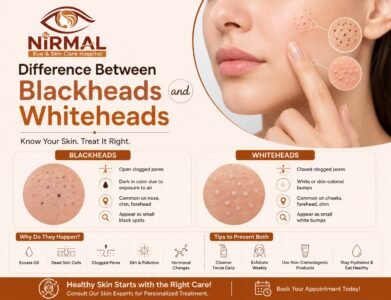
Blackheads vs Whiteheads: At a Glance
- Blackheads (Open Comedones)
Also called
- Whiteheads (Closed Comedones)
The Key Difference Between Blackheads and Whiteheads
Why Blackheads Are Dark
Why Whiteheads Stay White
Can a Whitehead Become a Blackhead?
What Causes Blackheads and Whiteheads?
- Excess sebum production : The more oil your skin produces, the higher the chance of pore blockages. Oily skin types in Gujarat face this challenge year-round, with summer heat and monsoon humidity making it significantly worse.
- Insufficient exfoliation : Dead skin cells that are not shed regularly accumulate at the surface and mix with sebum to form plugs inside pores.
- Comedogenic products : Using heavy moisturisers, oil-based sunscreens, or makeup products that are not labelled non-comedogenic will physically block pores. This is one of the most common preventable causes of whiteheads in women.
- Hormonal changes : Elevated androgens (male hormones present in both men and women) increase sebum production. This is why blackheads and whiteheads are common during puberty, pregnancy, and conditions like PCOS.
- Genetics : According to dermatologists, whether you are more prone to blackheads or whiteheads is dependent on your skin’s genetic makeup. Some people naturally have more densely packed pores or produce more sebum than others.
- Overwashing or harsh cleansers : Stripping the skin of natural oils triggers a rebound increase in sebum production, paradoxically worsening clogged pores. Bar soap on the face is one of the most common mistakes Dr. Shreya sees in Bhavnagar patients.
- Touching your face : Hands transfer oil, bacteria, and dead skin cells to facial pores throughout the day. Frequent face-touching significantly increases comedone formation.
- Diet : High glycaemic index foods (white rice, sugar, refined flour) and dairy products have been linked to increased sebum production and comedone formation in some individuals, though the relationship varies between people.
How to Treat Blackheads and Whiteheads
A versatile ingredient that reduces sebum production, minimises pore appearance, and controls oil, addressing the root cause of both blackheads and whiteheads. A 5% niacinamide serum used daily significantly reduces comedone formation over 4 to 6 weeks. Safe for all skin types and particularly helpful for Indian oily skin.
Alpha hydroxy acids exfoliate the skin surface, removing dead cells that contribute to pore blockage. Glycolic acid peels performed by a dermatologist are particularly effective for both blackhead and whitehead clearance. At-home AHAs in toners (5 to 10%) provide milder ongoing exfoliation.
Clay masks help with deep cleansing. Kaolin and bentonite clay absorb excess sebum and draw out impurities from open pores. Effective as a weekly treatment for blackhead-prone areas, particularly the nose and T-zone. Use once or twice weekly; daily use over-dries the skin.
Skipping moisturiser to control oiliness is one of the most counterproductive things oily skin patients do. Without hydration, skin overproduces sebum. A lightweight, oil-free, non-comedogenic moisturiser applied twice daily actually reduces long-term pore blockage by keeping sebum production balanced.
7 Common Mistakes People Make with Blackheads and Whiteheads
- Squeezing and picking
- Using pore strips daily or repeatedly
- Over-exfoliating to clear skin faster
- Scrubbing to remove blackhead darkness
- Using the same treatment for blackheads and whiteheads
- Applying toothpaste or home remedies
- Expecting overnight results