
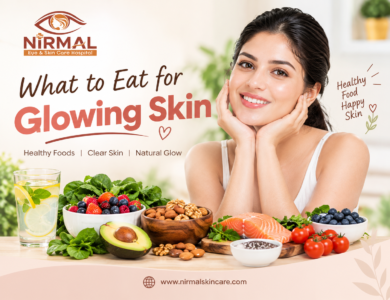
Every week, patients at our Bhavnagar clinic ask the same question in different words: what to eat for glowing skin? They have usually tried a juice cleanse, a trending supplement, or a long list of “superfoods”, and the mirror has barely changed.
The honest answer is less exciting and far more useful. Skin does not glow because of one miracle ingredient. It glows when your everyday meals supply enough protein, vitamin C, healthy fats, iron, zinc, and water, week after week, while you limit the foods that fuel inflammation and oil. This guide turns that idea into a plate, a daily routine, and a skin concern chart you can follow with normal Indian food.
If you want an ingredient-by-ingredient list, read our companion guide on foods for glowing skin. This article is the practical version: what to put on your plate and when.
5 Principles of What to Eat for Glowing Skin
Before any food list, these five principles decide whether your diet will show on your skin.
- Protein at every meal. Skin, hair, and nails are built from protein. Low protein intake shows up as dull, slow healing skin and weak nails.
- Vitamin C every day. Your body needs vitamin C to make collagen, the structural protein that keeps skin firm. Amla, guava, lemon, oranges, capsicum, and tomatoes all count.
- Healthy fats in small amounts. Fat helps build the skin barrier and absorb vitamins A, D, E, and K. Ghee, nuts, seeds, and fish do this job well.
- Steady blood sugar. Meals built on refined flour and sugar cause sharp insulin spikes. Emerging research suggests lower glycaemic diets may help acne in some people, so choosing whole grains and dal over maida and mithai is a sensible habit.
- Enough fluid. Water will not erase wrinkles, but dehydration makes skin look flat and tired. In Bhavnagar’s heat, aim for pale yellow urine through the day.
What to Eat for Glowing Skin Through the Day
You do not need to follow this exactly. Use it as a template and swap in foods your family already eats.
What to eat for glowing skin in the morning
- On waking: a glass of water or methi seeds soaked overnight. One fresh amla or a teaspoon of amla powder in water if you tolerate it.
- Breakfast: moong dal chilla with mint chutney, vegetable poha with peanuts and lemon, besan chilla, or oats with fruit and seeds. Add eggs or curd for protein.
- Mid-morning: a seasonal fruit such as papaya, guava, or orange, or a glass of chaas or coconut water.
What to eat for glowing skin at lunch
- One or two rotis (whole wheat, bajra, or jowar), a bowl of dal or kadhi, two sabzis including one leafy green, a salad with lemon, and a small bowl of curd.
- Finish the meal with a teaspoon of ghee on the roti or dal rather than a sweet dessert.
Evening snack
- Roasted chana, a handful of pumpkin seeds, sprouts chaat, makhana, or a few walnuts and almonds.
- Tulsi tea or green tea. Keep strong tea away from meals, because it reduces iron absorption.
What to eat for glowing skin at dinner
- Keep it lighter and earlier: vegetable khichdi, dal with one roti, vegetable soup with paneer, and grilled fish or eggs.
- If your skin allows dairy, a cup of warm haldi doodh with a pinch of black pepper before bed is a traditional habit that many patients enjoy. Black pepper helps the body absorb curcumin.
What to Eat for Glowing Skin by Skin Concern
| Skin concern | Eat more | Go easy on | Good to know |
|---|---|---|---|
| Acne and oily skin | Whole grains, dal, vegetables, walnuts, flaxseed, fish, zinc foods such as pumpkin seeds and chana | Sweets, maida, sugary drinks, deep fried snacks. Some people notice flares with skimmed milk or whey protein | Diet supports treatment but does not replace it for moderate acne |
| Dull, tired skin | Leafy greens with lemon, beetroot, dates, citrus fruit, enough water and protein | Crash diets, skipped meals, strong tea with meals | Check ferritin, haemoglobin, vitamin D and B12 if dullness persists |
| Dark spots and uneven tone | Vitamin C foods, tomatoes, papaya, colourful vegetables | No single food to avoid | Food will not remove existing spots. Daily sunscreen matters more |
| Dry, flaky skin | Ghee, nuts, seeds, fish, coconut, curd, water-rich fruit | Excess coffee and alcohol, very low fat diets | Pair with a good moisturiser |
| Early lines and loss of firmness | Protein, vitamin C foods, berries, falsa, green tea, colourful vegetables | High sugar diet, smoking, alcohol | Sun protection is the biggest factor in skin ageing |
What to Eat for Glowing Skin if You Are Vegetarian or Gujarati
A vegetarian Gujarati diet can support excellent skin. The traditional thali already has dal, kadhi, vegetables, curd, and whole-grain rotla. The gaps usually appear in three places.
Protein
Many vegetarian meals are heavy on carbohydrates and light on protein. Add dal or kadhi to both main meals, use sprouts and besan chilla for breakfast or snacks, and include paneer, curd and chaas daily.
Iron, vitamin B12 and vitamin D
Vegetarian and Jain diets can run low in iron and vitamin B12, and vitamin D is low in many Indians regardless of diet. Low B12 can contribute to tiredness and skin darkening in some people. Instead of guessing, ask your doctor for ferritin, B12, and vitamin D tests, and supplement only if the results show a need.
Omega-3 fats
Without fish, rely on walnuts, flaxseed (alsi), and chia seeds. A tablespoon of ground flaxseed in dough, curd, or smoothies is an easy habit.
Easy Gujarati swaps: choose roasted chana or makhana instead of fried farsan, bajra rotla instead of refined flour puri, kadhi and khichdi on lighter days, and fruit instead of mithai on most days, keeping sweets for occasions.
Foods to Limit for Glowing Skin
You do not need to ban anything. Reducing the following, especially if you are acne-prone, tends to help:
- Sugary foods and drinks: mithai, cold drinks, packaged juices, sweetened chai, and bakery items.
- Refined flour: maida, white bread, bakery biscuits, and instant noodles.
- Deep-fried and heavily processed snacks: especially food fried in reused oil.
- Excess alcohol: it dehydrates the body and disturbs sleep, which is when skin repairs itself.
Be cautious about cutting out entire food groups on the advice of social media. As dermatologists point out in guidance from the American Academy of Dermatology on diet and skin health, much online diet advice is not based on solid research, and elimination diets can leave you short of important nutrients. A balanced diet that supports overall health is also the best diet for your skin.
What Food Cannot Do for Your Skin
Knowing the limits protects you from disappointment and from wasting money.
- Food cannot replace sunscreen. UV exposure is the biggest cause of pigmentation and early ageing.
- Food cannot cure moderate to severe acne, eczema, psoriasis, melasma, or fungal infections. These need medical treatment.
- Food cannot change your genetics or hormones. Conditions such as PCOS and thyroid disease affect skin and need proper evaluation.
- Food works slowly. Skin renews over several weeks, so judge a change after 6 to 8 weeks, not 6 days.
Frequently Asked Questions
What should I eat every day for glowing skin?
Aim for two or more colors of vegetables and one fruit, a protein source at every meal, whole grains instead of refined flour, a small amount of ghee, nuts or seeds, curd or chaas, and enough water. Taking a fresh amla or another vitamin C food daily is a useful Indian habit.
Which fruit is best for glowing skin?
No single fruit wins. Papaya, guava, orange, amla, strawberries, and falsa are all good vitamin C and antioxidant sources. Eat whole fruit rather than juice, because juice has less fibre and more concentrated sugar.
How long does it take to see a glow from diet changes?
Better hydration can make skin look fresher within days. For changes linked to nutrition, such as correcting low iron or cutting down on sugar if you are acne-prone, give it 6 to 8 weeks of consistent eating before judging results.
Can I get glowing skin with diet alone?
Diet is a strong foundation, but glowing skin also depends on sunscreen, sleep, stress, hormones, and a suitable skincare routine. If you have acne, pigmentation, or persistent dullness, a dermatologist can find the cause and treat it faster than diet alone.
Summary
- Build lunch and dinner on the glow plate: half vegetables and fruit, a quarter protein, a quarter whole grains, plus a little healthy fat and curd.
- Eat protein at every meal, a vitamin C food daily, and pair plant iron with lemon.
- Spread your meals through the day using the simple morning, lunch, snack and dinner template above.
- Adjust your choices for your skin concern: acne, dullness, dark spots, dryness or early ageing.
- Vegetarian and Gujarati diets work well, but check protein, iron, B12 and vitamin D.
- Limit sugar, refined flour and deep fried foods rather than banning whole food groups.
- Food supports skin but cannot replace sunscreen or medical treatment. Judge results after 6 to 8 weeks.
Aim for two or more colors of vegetables and one fruit, a protein source at every meal, whole grains instead of refined flour, a small amount of ghee, nuts or seeds, curd or chaas, and enough water. Taking a fresh amla or another vitamin C food daily is a useful Indian habit.
No single fruit wins. Papaya, guava, orange, amla, strawberries, and falsa are all good vitamin C and antioxidant sources. Eat whole fruit rather than juice, because juice has less fibre and more concentrated sugar.
Better hydration can make skin look fresher within days. For changes linked to nutrition, such as correcting low iron or cutting down on sugar if you are acne-prone, give it 6 to 8 weeks of consistent eating before judging results.
Diet is a strong foundation, but glowing skin also depends on sunscreen, sleep, stress, hormones, and a suitable skincare routine. If you have acne, pigmentation, or persistent dullness, a dermatologist can find the cause and treat it faster than diet alone.
Summary
- Build lunch and dinner on the glow plate: half vegetables and fruit, a quarter protein, a quarter whole grains, plus a little healthy fat and curd.
- Eat protein at every meal, a vitamin C food daily, and pair plant iron with lemon.
- Spread your meals through the day using the simple morning, lunch, snack and dinner template above.
- Adjust your choices for your skin concern: acne, dullness, dark spots, dryness or early ageing.
- Vegetarian and Gujarati diets work well, but check protein, iron, B12 and vitamin D.
- Limit sugar, refined flour and deep fried foods rather than banning whole food groups.
- Food supports skin but cannot replace sunscreen or medical treatment. Judge results after 6 to 8 weeks.