
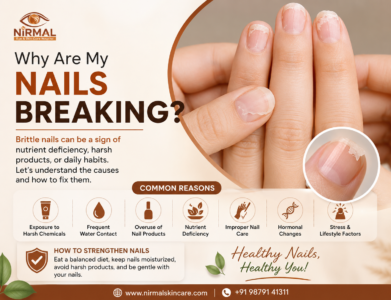
If you are asking why are my nails breaking, you have probably already tried a calcium supplement, a biotin tablet, or a strengthening nail polish and found that nothing changed. This is one of the most common frustrations patients bring to Nirmal Skin Care, Bhavnagar.
The reason these attempts fail is that brittle, breaking nails have multiple different causes, and the treatment that fixes one cause actively does nothing for another. Taking calcium for nails that are breaking because of thyroid disease, or buying a nail hardener for nails that are breaking because of iron deficiency, produces exactly the result most patients experience: no improvement despite consistent effort.
This guide from Dr. Shreya Somani Nirmal (MD Dermatology, Gold Medalist) identifies the 9 most common real reasons nails break in Indian patients and tells you exactly what to do and what to test for each one.
How Nails Are Made and Why They Break
Your nail plate, the hard visible part of the nail, is made almost entirely of keratin, a fibrous structural protein that is also the main component of hair and the outer skin layer. The nail plate grows from the nail matrix, a tissue hidden under the skin at the base of the nail.
Healthy nails are flexible but strong, smooth, and grow approximately 3 to 4 mm per month on fingernails (slower on toenails). When nails break easily, it means one of two things is happening: either the keratin structure of the nail plate itself has weakened, or the nail is being physically damaged faster than it can maintain its integrity.
Dermatologists classify breaking nails into two patterns, each pointing in a different direction for diagnosis:
- Onychoschizia: the nail splits horizontally into layers at the free edge, like pages of a book peeling apart. This pattern strongly suggests repeated water exposure, chemical contact, or nutritional deficiency.
- Onychorrhexis: longitudinal ridges run from base to tip, and the nail splits vertically or lengthwise. This pattern suggests internal conditions, most commonly thyroid disease, iron deficiency, or aging-related changes in the nail matrix.
9 Real Reasons Why Your Nails Are Breaking
Repeated Water and Soap Exposure The Most Common Cause
If you are asking, “Why are my nails breaking?” and you regularly wash dishes, clean the house, or have hands in water multiple times per day, this is almost certainly the primary cause, and it has nothing to do with nutrition.
Each time your nails absorb water, the nail plate swells. Each time they dry out, the plate contracts. Repeated cycles of swelling and contraction cause the keratin bonds within the nail to fatigue and eventually split. Soap accelerates this by stripping the nail’s natural lipid layer that normally protects it from water damage.
- Wear waterproof gloves for all dishwashing, cleaning, and laundry
- Apply a fragrance-free hand cream or cuticle oil after each handwash
- Pat hands dry gently rather than rubbing
- This single habit change produces visible improvement in nail strength within 4 to 6 weeks, faster than any supplement
Iron Deficiency (Low Ferritin)
Iron deficiency is the most common nutritional cause of breaking nails in Indian women. Iron is essential for red blood cell production, and when iron stores are low, the body prioritises iron delivery to vital organs. Non-essential tissues, including the nail matrix, receive less oxygen and nutrients, producing weaker, more brittle nails.
- Severe iron deficiency causes spoon-shaped nails (koilonychia), nails that curve upward like a spoon
- Moderate iron deficiency causes brittle, ridged, or soft nails that break easily without obvious shape change
- Iron deficiency is extremely common in Indian women due to menstruation, pregnancy, and dietary patterns
- Blood test needed: CBC + Serum Ferritin. Ferritin below 30 ng/mL causes nail brittleness even when haemoglobin is still normal
- Treatment: iron supplementation + vitamin C (to enhance absorption) + dietary changes
Thyroid Disease (Hypothyroidism)
Hypothyroidism, or underactive thyroid, is one of the most commonly missed causes of broken nails. The thyroid hormone controls the rate of cell growth and metabolism throughout the body, including in the nail matrix. When thyroid function is low, nail growth slows dramatically and the nail plate becomes thin, brittle, and prone to vertical ridging and breaking.
- Associated signs: fatigue, weight gain, dry skin, hair thinning, feeling cold, constipation, and brain fog alongside breaking nails
- Hypothyroidism is significantly more common in women and increases in prevalence after age 35
- Blood test: TSH + Free T4. This is one of the first tests to order when nails are breaking without an obvious external cause
- Treatment is medical (levothyroxine) nail improvement follows thyroid normalisation over 3 to 6 months
Biotin (Vitamin B7) Deficiency
Biotin is the only nutritional supplement with direct clinical trial evidence for improving nail strength. A Swiss study of 45 patients who took 2.5 mg of oral biotin daily for 5.5 months showed a 25% increase in nail plate thickness and marked improvement in brittleness in 91% of participants.
- True biotin deficiency is not common in patients eating a varied diet; eggs, almonds, sweet potato, nuts, and whole grains all contain biotin
- Patients on anticonvulsant medications, those who eat large amounts of raw egg white (which blocks biotin absorption), and those with inflammatory bowel disease are at higher deficiency risk
- Biotin dose for nails: 2.5 mg/day for a minimum of 5 to 6 months; effect is not seen until a full nail plate has grown out
- Caution: high-dose biotin supplementation interferes with TSH and thyroid function tests. Inform your doctor if you are taking biotin before blood tests
Acetone and Nail Polish Remover Damage
Acetone dissolves the lipid molecules that hold keratin fibers together in the nail plate, leaving the nail severely dehydrated, brittle, and prone to peeling after each use. Regular acetone exposure is one of the most reliable ways to cause breaking nails regardless of any nutritional supplement use.
- Switch to acetone-free nail polish remover; these use ethyl acetate, which is significantly less drying
- Remove polish no more than once every 2 to 3 weeks; frequent removal is cumulative nail damage
- Apply cuticle oil immediately after any nail polish removal
- Give nails a 2-week break from all polish every 2 to 3 months to allow recovery
Zinc Deficiency
Zinc is essential for protein synthesis and cell division, both processes that the rapidly dividing nail matrix requires in large amounts. Zinc deficiency slows nail growth, causes brittleness, and produces white horizontal bands (Beau’s lines) across the nail plate.
- Common in strict vegetarians and vegans who avoid meat, seafood, and dairy
- Associated with slow wound healing, reduced immunity, and hair thinning alongside nail problems
- Blood test: Serum Zinc
- Dietary sources: pumpkin seeds, chickpeas, whole grains, sesame seeds, lentils
- Supplement only if a blood test confirms a deficiency; excess zinc is toxic and interferes with copper absorption
Insufficient Protein and Amino Acid Intake
Nails are approximately 98% keratin protein. When dietary protein is consistently insufficient through crash diets, very restrictive eating patterns, or post-surgical malabsorption, the nail matrix does not have the amino acids needed to build a strong, well-organized keratin structure. Nails become soft, slow-growing, and brittle.
- Most common in patients following very low-calorie diets, patients who have had bariatric surgery, and those with eating disorders
- Cysteine and methionine are the sulphur-containing amino acids most important for nail keratin cross-linking and strength
- Assessment: dietary review aims for a minimum of 50 to 60 g of protein daily for adults
- Protein-rich foods: eggs, paneer, dal, rajma, Greek yogurt, fish, chicken
Vitamin D Deficiency
Vitamin D deficiency is extremely common in India, even in sun-rich Bhavnagar, because skin tone (which reduces UV absorption), clothing, indoor lifestyles, and sunscreen use all limit the skin’s ability to synthesize vitamin D. Low vitamin D affects keratinocyte (skin and nail cell) function and the overall health of the nail matrix environment.
- Vitamin D deficiency is often clinically silent; nail brittleness may be the only noticeable sign alongside fatigue and bone aching
- Blood test: 25-OH Vitamin D levels below 20 ng/mL are deficient
- Supplement: 2000 IU/day of Vitamin D3 or the dose recommended by your doctor based on blood test results
- Retest after 3 to 4 months of supplementation to confirm levels have normalised
Psoriasis and Eczema Affecting the Nail
Both psoriasis and eczema can affect the nail, and neither responds to nutritional supplements or protective habits because the cause is inflammatory rather than structural or nutritional. Up to 80% of patients with psoriasis develop nail changes at some point, making nail psoriasis one of the most important conditions to rule out in patients with unexplained nail problems.
- Psoriatic nail changes: pitting (small dents across the nail surface), onycholysis (nail lifting from the nail bed), yellow-brown discolouration, and thickening
- Eczema nail changes: ridging, pitting, and brittleness from inflammation of the nail matrix and surrounding skin
- If nails show pitting, discolouration, or lifting alongside breaking, a dermatologist assessment is essential before treating as a nutritional problem
How to Fix Breaking Nails
- Identify whether the cause is external or internal
Are your hands in water frequently? Do you use acetone? Are you on a very restricted diet? If yes to any, external causes are likely. If you have protected your hands for 6 weeks and nails are still breaking, proceed to blood tests.
- Get the right blood tests CBC, Ferritin, TSH, Free T4, Zinc, Vitamin D
These 5 to 6 tests cover virtually all internal causes of breaking nails in Indian patients. Do not take supplements before testing results, as they will be inaccurate if you are already supplementing, particularly biotin (which interferes with TSH testing).
- Treat the specific deficiency found
Iron deficiency: iron supplement + Vitamin C + dietary changes. Thyroid: medical treatment from your physician. Zinc: zinc supplement (prescription dose). Vitamin D: 2000 IU/day D3. Biotin: 2.5 mg/day for 5 to 6 months. Protein: dietary review and increase.
- Apply nail moisturiser and cuticle oil daily
A fragrance-free hand cream or cuticle oil (coconut, jojoba, or almond oil) applied to the nails and cuticles twice daily provides the topical hydration that reduces water-loss brittleness. Apply immediately after handwashing while the nail is still slightly damp.
- Be patient nails take 3 to 6 months to show improvement
A fingernail takes 3 to 4 months to grow fully from matrix to free edge. Changes from supplementation or protective habits only become visible in the new nail growing above the problem area. Stop switching treatments before giving each one a time to work; this is the most common reason patients see no improvement despite using the correct approach.
Home Tips That Actually Help Breaking Nails
- Waterproof gloves are always for dishes, cleaning, laundry, and any task involving prolonged water or chemical exposure
- Glass nail file metal files create micro-fractures at the nail edge that worsen splitting; glass files seal the free edge
- Keep nails short during treatment; shorter nails experience less mechanical stress and break less frequently while underlying causes are being treated
- Cuticle oil nightly massage: Apply coconut, almond, or jojoba oil to the nail plate and cuticle before bed; wear cotton gloves overnight for best absorption
- No picking or peeling away splitting layers removes living nail material and worsens damage dramatically
- Acetone-free remover only and limit polish removal to once every 2 to 3 weeks
- Protein at every meal dal, eggs, paneer, or chicken ensures amino acid supply to the nail matrix
- Stay hydrated; chronic dehydration visibly affects nail plate elasticity and brittleness
Frequently Asked Questions
Does Calcium Deficiency Cause Nails to Break?
No. Calcium makes up only about 0.2% of the nail plate by weight and plays almost no role in nail hardness or strength. The white spots patients associate with calcium deficiency are almost always caused by minor trauma to the nail base they grow out with the nail and require no treatment. Calcium supplements will not strengthen nails that are breaking for any of the 9 causes listed above.
Why Are My Nails Breaking Even Though I Take Biotin?
Biotin helps only when biotin deficiency is the actual cause, which is relatively uncommon in patients eating a varied diet. If you have been taking biotin for more than 6 months without improvement, the cause of your nail brittleness is almost certainly something else thyroid disease, iron deficiency, water exposure, or another factor that biotin does not address. Blood tests will identify what is actually responsible.
How Long Does It Take for Nails to Stop Breaking After Treatment?
Improvement becomes visible as a new, healthy nail plate grows out from the matrix. Since a full nail plate takes 3 to 4 months to grow from base to free edge, visible improvement from any treatment, whether protective habits, supplements, or medication, typically takes 3 to 6 months before you can clearly see the difference between old and new nail growth. Do not stop treatment before this window has passed.
Are Gel Nails or Acrylics Making My Nails Break More?
Yes, in most cases. Gel and acrylic nails require a filing-down of the natural nail surface during application, which permanently thins the nail plate. Removal using acetone soaks for 10 to 15 minutes is one of the most damaging processes a nail can undergo repeatedly. Gel manicures and acrylics are generally not recommended for patients already experiencing nail brittleness; they temporarily mask the problem while making the underlying nail significantly weaker.