Difference Between Blackheads and Whiteheads

WhatsApp Image 2026 07 21 at 12.14.16 PM
You spot a tiny dark dot on your nose. Or a small, skin-coloured bump on your chin. One is a blackhead. One is a whitehead. You probably know they are both related to clogged pores, but beyond that, most people treat them identically, which is precisely why they keep coming back.
The difference between blackheads and whiteheads is more than just colour. They form through a slightly different mechanism, they respond to different treatments, and the common home remedies patients try often make both worse rather than better. Dr. Shreya Somani Nirmal (MD, Dermatology, Gold Medalist) at Nirmal Skin, Hair, and Laser Centre in Bhavnagar wrote this guide to give you a complete, clinically accurate picture of both.

What Are Blackheads and Whiteheads?

Both blackheads and whiteheads are a type of acne called comedones. A comedo forms when a hair follicle (pore) becomes blocked with a combination of dead skin cells, excess sebum (the natural oil your skin produces), and sometimes cosmetic residue or environmental debris.
They are classified as non-inflammatory acne, which means they do not involve bacteria or infection in the way painful pimples and cysts do. This is why they are usually not red or swollen they are simply blocked pores, waiting to be cleared.
According to the American Academy of Dermatology, comedonal acne (blackheads and whiteheads) is the most common form of acne in India and globally, affecting all skin types and age groups – not just teenagers. The key to clearing them is understanding exactly what separates a blackhead from a whitehead and why they respond to different treatments.

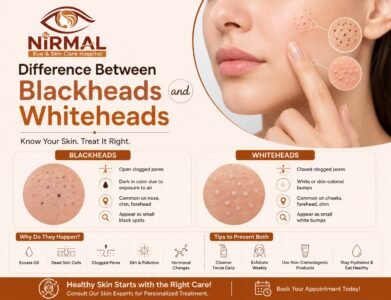
Blackheads vs Whiteheads: At a Glance

Also called

Open comedones
Pore status
Open at the surface
Colour
Dark brown or black
Why dark?
Oxidation of melanin by air exposure, not dirt
Texture
Flat or slightly raised, rough surface
Common areas
Nose, chin, forehead (T-zone)
Pain
Usually none
Best treatment
Salicylic acid, retinoids, chemical peels
Also called
Closed comedones
Pore status
Closed sealed with thin skin layer
Colour
White, cream, or flesh-coloured
Why white?
No air exposure trapped material stays pale
Texture
Small raised bump under or at skin surface
Common areas
Chin, cheeks, forehead, around nose
Pain
Occasionally tender if deep
Best treatment
Retinoids, niacinamide, chemical exfoliants

The Key Difference Between Blackheads and Whiteheads

The fundamental difference between a blackhead and a whitehead comes down to one thing: whether the pore is open or closed.

Why Blackheads Are Dark

Blackheads are in an open pore and have been exposed to the air. The chemical inside, melanin, has been oxidized by the air and turned dark. This is a common misconception that trips up many patients in Bhavnagar who scrub their skin vigorously, thinking the dark colour is dirt. It is not. Blackheads appear dark because the clogged material inside the pore becomes exposed to oxygen and oxidizes. The color is not caused by dirt. Scrubbing harder will not remove blackheads and can actually irritate and damage the skin barrier.

Why Whiteheads Stay White

Whiteheads are closed comedones. Like blackheads, they form when oil and skin cells clog a pore, but the difference is that the pore remains sealed with a thin layer of skin. Because there is no air exposure, the trapped material does not oxidize and stays white or yellowish.
Because whiteheads are sealed, they are often harder to treat topically than blackheads. The skin covering them creates a physical barrier that slows how well active ingredients penetrate to the blockage below. This is why retinoids, which work by increasing cell turnover and thinning the outer layer, are particularly effective for whiteheads.

Can a Whitehead Become a Blackhead?

A whitehead is a closed comedone. If the surface of that pore opens up and the trapped material is exposed to air, it oxidizes and darkens into a blackhead. This conversion can happen naturally over time, or as a result of the skin being stretched or the pore opening up. It is one reason why the same blocked follicle may appear as a whitehead one week and a blackhead later.

What Causes Blackheads and Whiteheads?

Both types of comedones form from the same underlying process, a pore becoming clogged but certain factors make some people more prone than others, especially in Bhavnagar’s hot and often humid climate:
  • Excess sebum production : The more oil your skin produces, the higher the chance of pore blockages. Oily skin types in Gujarat face this challenge year-round, with summer heat and monsoon humidity making it significantly worse.
  • Insufficient exfoliation : Dead skin cells that are not shed regularly accumulate at the surface and mix with sebum to form plugs inside pores.
  • Comedogenic products : Using heavy moisturisers, oil-based sunscreens, or makeup products that are not labelled non-comedogenic will physically block pores. This is one of the most common preventable causes of whiteheads in women.
  • Hormonal changes : Elevated androgens (male hormones present in both men and women) increase sebum production. This is why blackheads and whiteheads are common during puberty, pregnancy, and conditions like PCOS.
  • Genetics : According to dermatologists, whether you are more prone to blackheads or whiteheads is dependent on your skin’s genetic makeup. Some people naturally have more densely packed pores or produce more sebum than others.
  • Overwashing or harsh cleansers : Stripping the skin of natural oils triggers a rebound increase in sebum production, paradoxically worsening clogged pores. Bar soap on the face is one of the most common mistakes Dr. Shreya sees in Bhavnagar patients.
  • Touching your face : Hands transfer oil, bacteria, and dead skin cells to facial pores throughout the day. Frequent face-touching significantly increases comedone formation.
  • Diet : High glycaemic index foods (white rice, sugar, refined flour) and dairy products have been linked to increased sebum production and comedone formation in some individuals, though the relationship varies between people.

How to Treat Blackheads and Whiteheads

The treatment approach for blackheads and whiteheads shares some overlap but also has important differences. Here are the most clinically effective at-home options, organised by ingredient and their specific targets:
Salicylic Acid (BHA)
The gold standard for blackheads. Salicylic acid cleansers dissolve oil and unclog pores. It is oil-soluble, meaning it penetrates into the pore lining itself and dissolves the sebum and dead skin plug from within. Use a 0.5 to 2% salicylic acid cleanser or toner daily. Best for oily skin and large open pores.
Retinoids (Retinol, Tretinoin)
The most effective treatment for whiteheads. Retinoids increase skin cell turnover, preventing dead cells from accumulating in pores and helping existing comedones surface and clear. Over-the-counter retinol works slowly. Prescription tretinoin prescribed by Dr. Shreya works significantly faster for persistent whiteheads.
Niacinamide

A versatile ingredient that reduces sebum production, minimises pore appearance, and controls oil, addressing the root cause of both blackheads and whiteheads. A 5% niacinamide serum used daily significantly reduces comedone formation over 4 to 6 weeks. Safe for all skin types and particularly helpful for Indian oily skin.

AHAs (Glycolic and Lactic Acid)

Alpha hydroxy acids exfoliate the skin surface, removing dead cells that contribute to pore blockage. Glycolic acid peels performed by a dermatologist are particularly effective for both blackhead and whitehead clearance. At-home AHAs in toners (5 to 10%) provide milder ongoing exfoliation.

Clay Masks

Clay masks help with deep cleansing. Kaolin and bentonite clay absorb excess sebum and draw out impurities from open pores. Effective as a weekly treatment for blackhead-prone areas, particularly the nose and T-zone. Use once or twice weekly; daily use over-dries the skin.

Non-Comedogenic Moisturiser

Skipping moisturiser to control oiliness is one of the most counterproductive things oily skin patients do. Without hydration, skin overproduces sebum. A lightweight, oil-free, non-comedogenic moisturiser applied twice daily actually reduces long-term pore blockage by keeping sebum production balanced.

7 Common Mistakes People Make with Blackheads and Whiteheads

Picking or squeezing clogged pores may increase inflammation, introduce bacteria, and increase the risk of acne scars or discoloration. This is the single most common cause of post-inflammatory hyperpigmentation (dark marks) on Indian skin after comedones. The immediate satisfaction is not worth weeks of dark spots.
Pore strips physically pull out the top of a blackhead but do not clear the follicle. The blackhead returns within days. Repeated use stretches and damages pores, making them appear larger over time. Use sparingly, if at all; salicylic acid is far more effective.
Exfoliating more than 2 to 3 times per week strips the skin barrier, triggers rebound oil production, and causes more comedone formation, the opposite of the intended effect. More frequent exfoliation slows, not speeds, the clearing process.
Blackheads look dark because of oxidation, not dirt. No amount of scrubbing will remove the dark colour. It only irritates the skin, enlarges pores through friction damage, and worsens oiliness. Chemical exfoliation with salicylic acid is the correct approach.
Salicylic acid is highly effective for blackheads (open comedones) because it enters the pore and dissolves the plug. For whiteheads (closed comedones), retinoids work better because they address the sealed follicle through cell turnover. Treating both with just one approach gives partial results at best.
Toothpaste contains fluoride, sodium lauryl sulphate, and mint compounds that irritate and dry out skin without any comedone-clearing effect. Lemon juice and baking soda are too harsh for facial skin and damage the acid mantle. These home remedies make clogged pores worse, not better.
Consistency is important. Many acne treatments take several weeks before noticeable improvement occurs. Salicylic acid takes 4 to 6 weeks of daily use. Retinoids take 8 to 12 weeks. Switching products every two weeks before they have had time to work is one of the most common reasons patients see no improvement despite using the right ingredients.

Frequently Asked Questions

Can blackheads be removed permanently?
Blackheads cannot be permanently eliminated since they are a natural consequence of having pores and producing sebum. However, with a consistent skincare routine using salicylic acid, niacinamide, and retinoids, combined with regular professional peels, they can be reduced to the point where they are barely visible and rarely cause concern. The goal is management, not permanent eradication.
No. Blackheads appear dark because the clogged material inside the pore becomes exposed to oxygen and oxidizes. The colour is not caused by dirt. This is one of the most persistent myths about blackheads. Scrubbing harder or washing more frequently will not remove the dark colour and often makes the underlying problem worse.
Blackheads are open comedones darkened by oxidation. Whiteheads are closed comedones with sebum and dead skin trapped under a thin skin layer. Milia are small white cysts that contain keratin, not sebum, and are located deeper in the skin. Milia cannot be treated with salicylic acid or retinoids in the same way; they typically need professional extraction or a dermatologist’s prescription.
Using both in the same application can be irritating, especially for sensitive skin. The standard recommendation is to use salicylic acid in the morning and retinol at night. Do not use both in the same routine until your skin has adapted to each individually. For Indian skin types that tend toward sensitivity when starting active ingredients, Dr. Shreya usually recommends introducing one ingredient at a time.
If clogged pores become persistent, painful, or begin causing scarring, professional treatment may help improve long-term skin health and reduce future breakouts. You should also see a dermatologist if over-the-counter treatments have not improved your skin after 8 to 12 weeks, if you have dark marks from previous picking or squeezing, or if you have both comedones and inflammatory acne together.